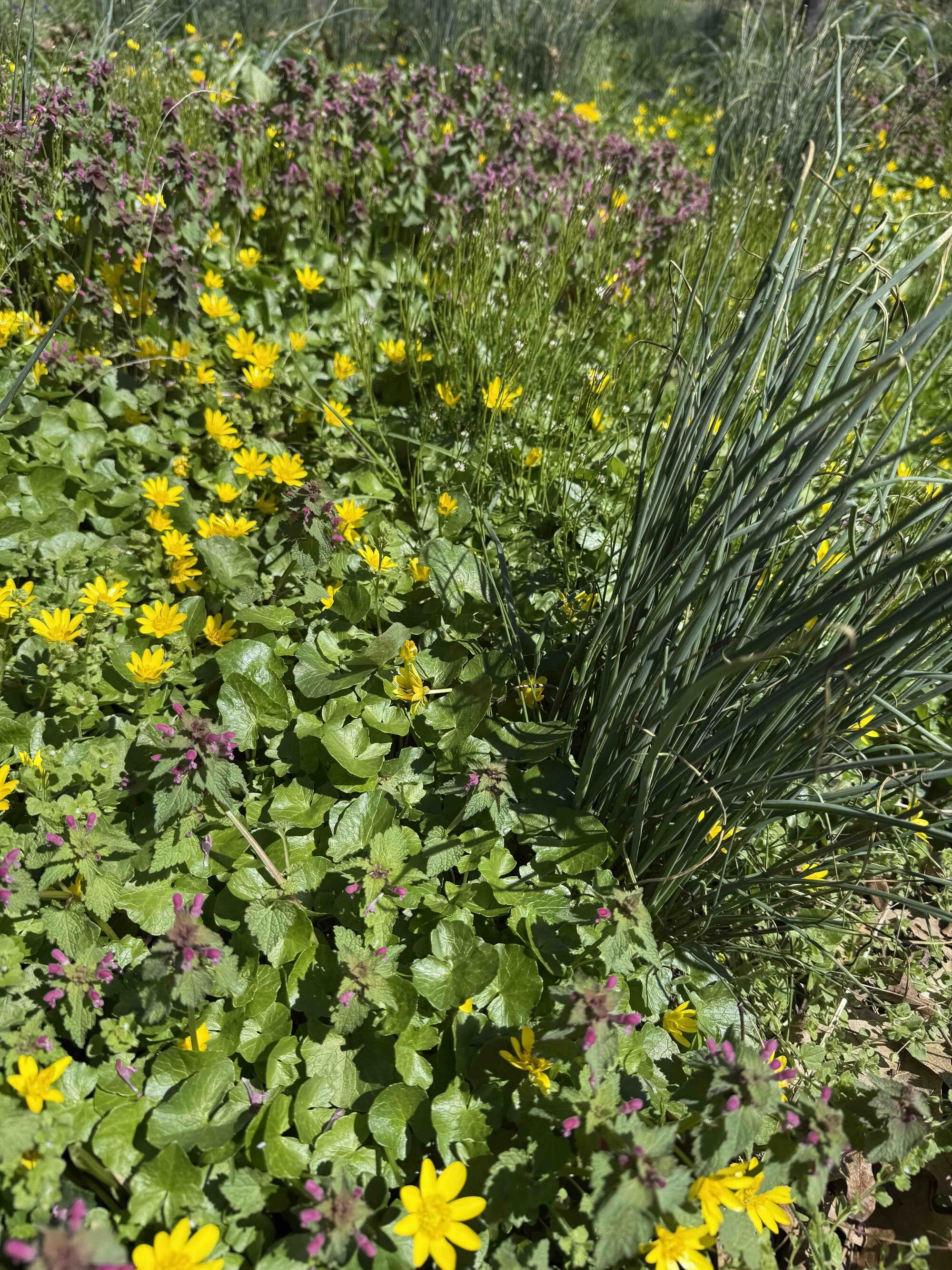
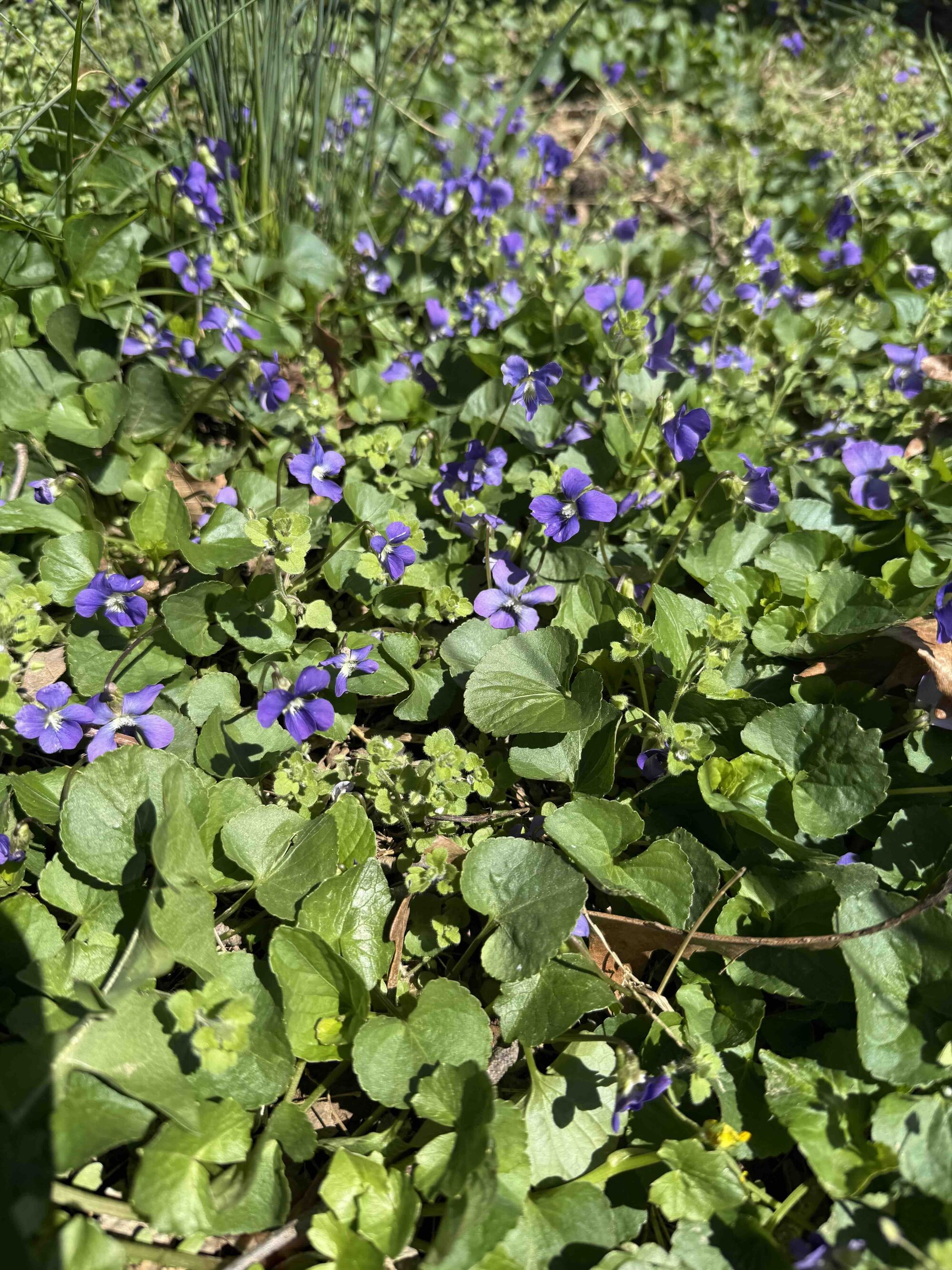
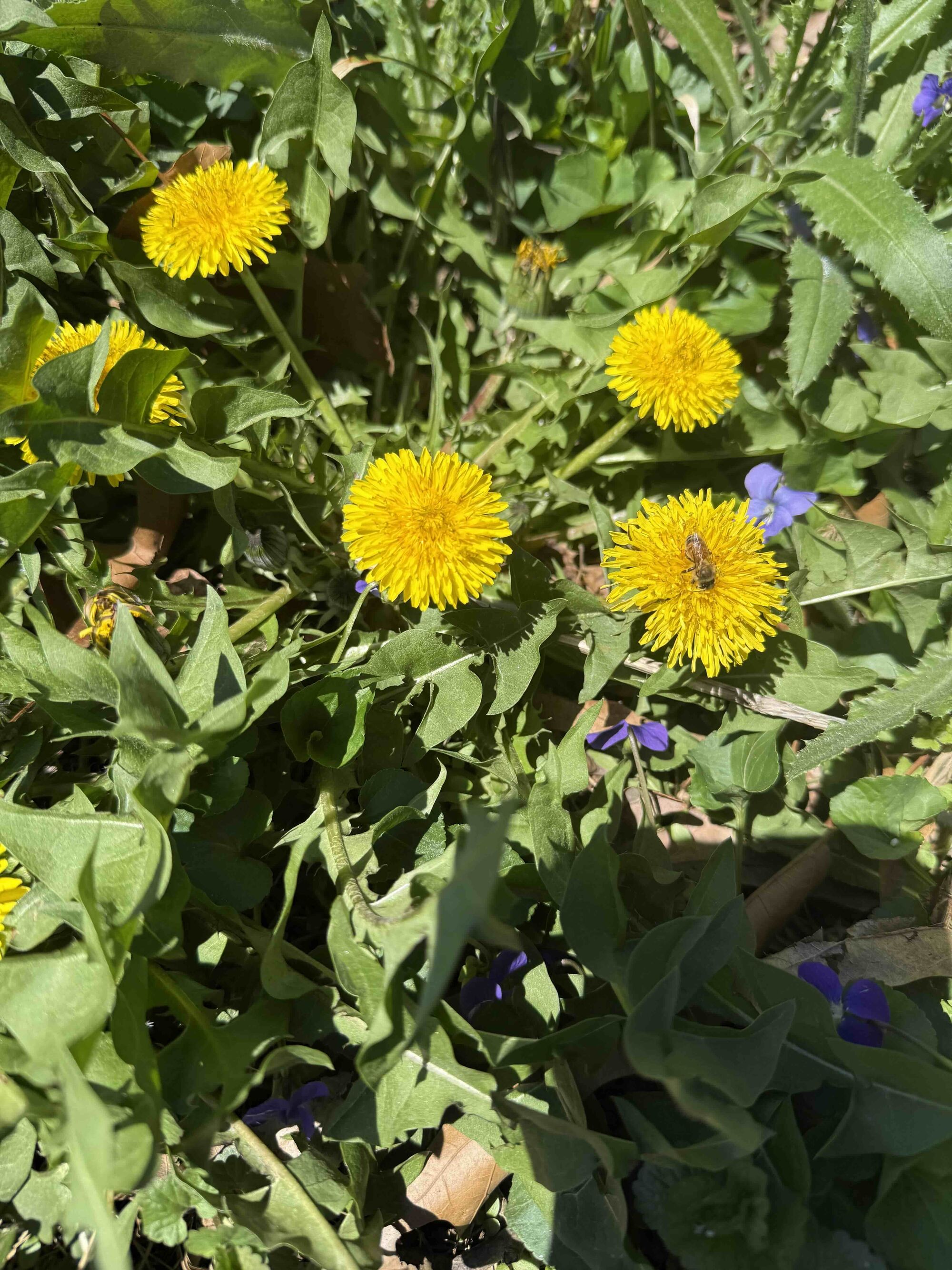
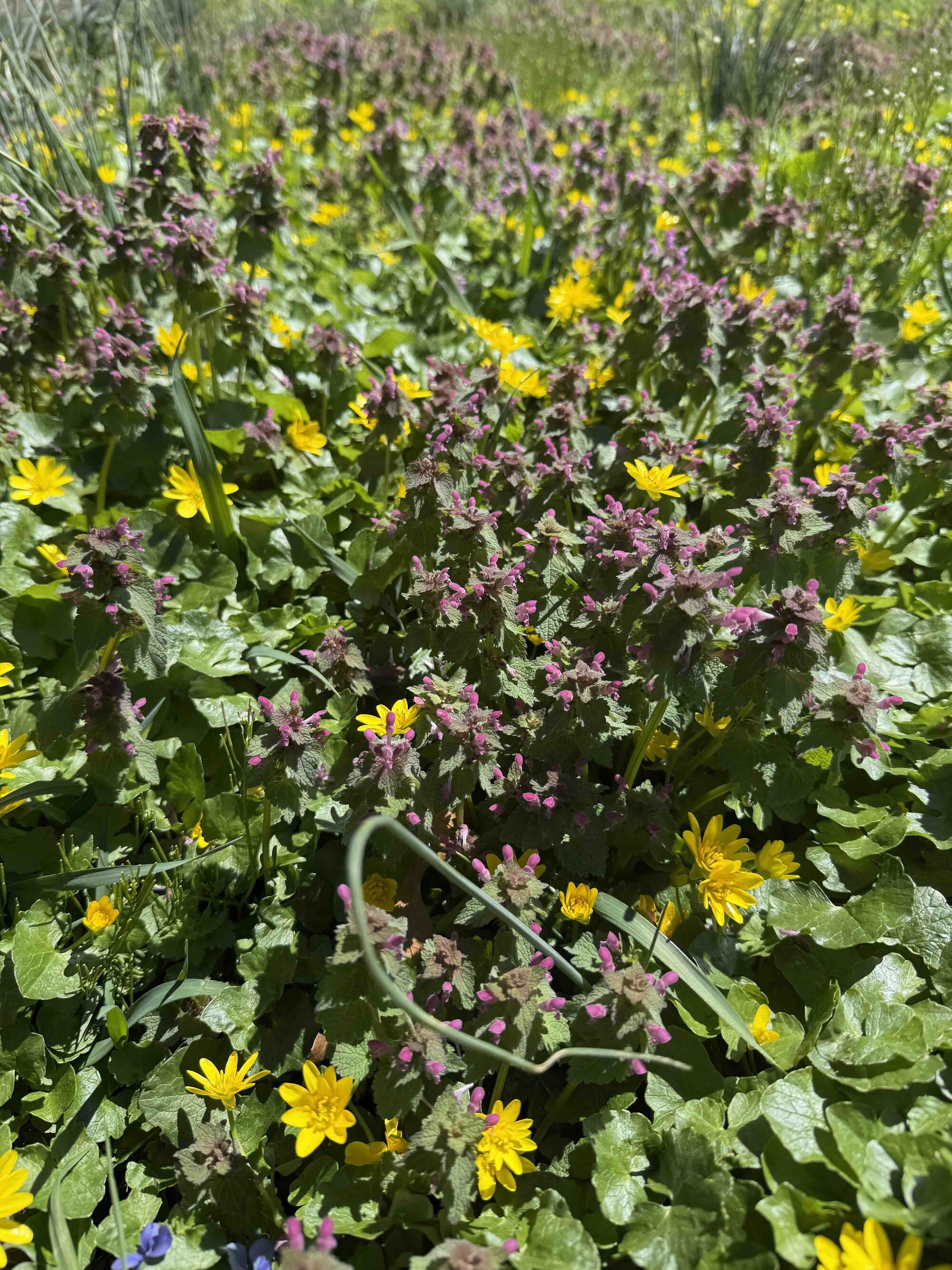
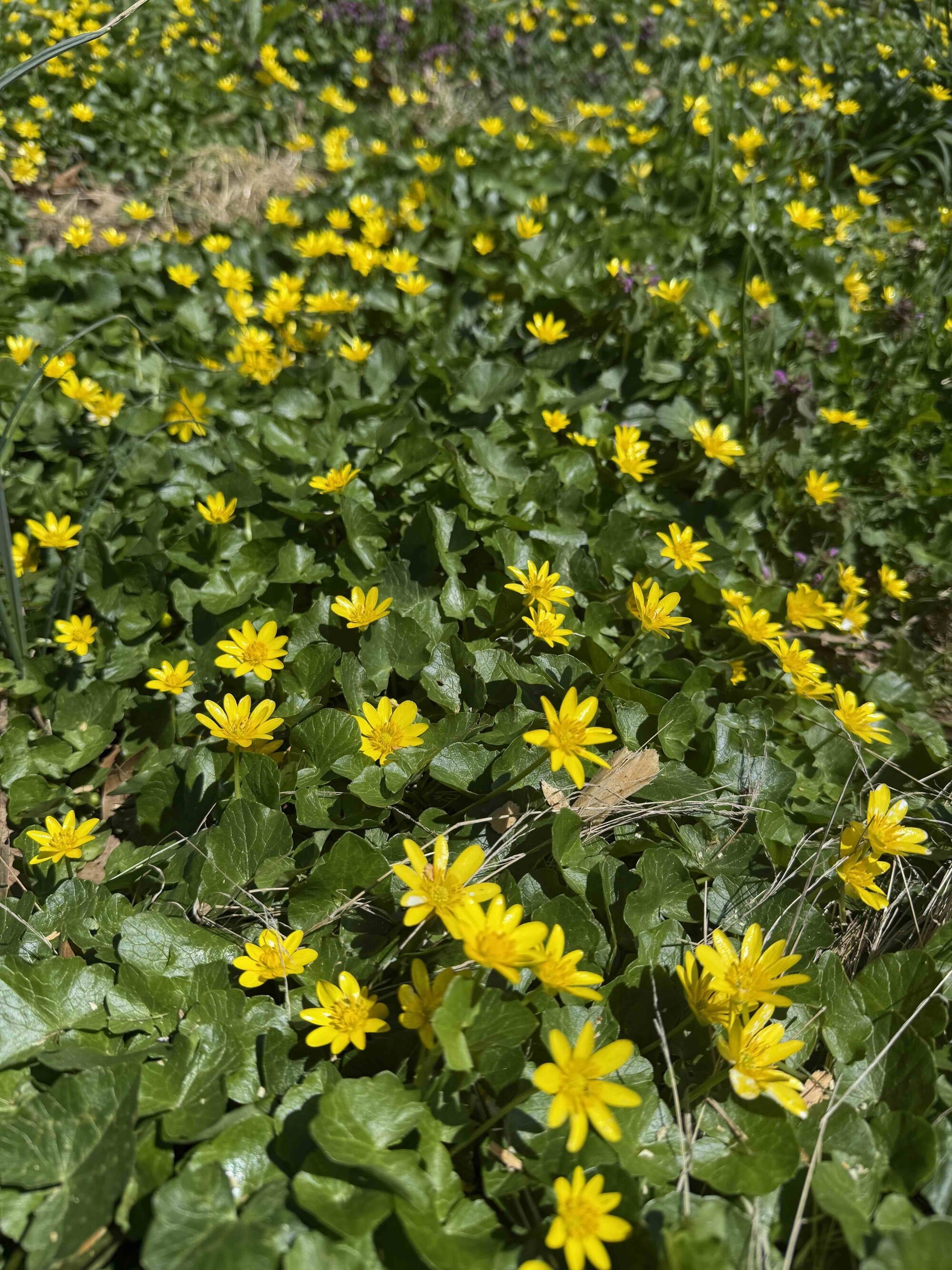
In just a few square feet, here’s what you’re seeing: - Purple dead-nettle — one of the first plants to bloom, feeding pollinators and signaling living, undisturbed soil.
- Wild violets — native plants that only stick around when soil biology is healthy and balanced.
- Dandelions (with bees on them) — deep taproots that pull minerals like calcium and potassium up from the
soil, also great as a spring detox.
- Lesser celandine — A beautiful yellow flowered ground cover that's helping retain moisture and build organic soil matter.
And here’s the part most people don’t realize: 👉 These don’t exist on chemically sprayed land. Looking at nearby pastures that are chemically treated, none of these things exist there.
If we were using herbicides or chemicals, this would all be gone from our pastures. -No flowers.
-No pollinators.
-No diversity. Just grass. And grass is good, but it's not the only piece of the puzzle.
Instead, what you’re looking at is a pasture that’s actually alive. And that directly affects the quality and taste of the meat you’re buying.
Those dandelions?
They’re pulling minerals up from deep in the soil… which then end up in the plants… which the animals eat.
Those diverse plants (that others would call "weeds")?
They create a wider, more diverse and natural diet for the animals—not just one type of forage (that's called monoculture).
All of this leads to healthier animals and meat that’s more nutrient-dense and flavorful.
So while we’re not certified organic, we are: - Grass-fed & Grass-finished
- Pasture-raised
- Non-GMO & soy-free
- Never giving antibiotics, vaccines, or added hormones
We’re not bogged down with chasing a label or certification.
We’re building a system you can actually see—and taste. That's why if you stop by the farm to pickup an order, you are always welcome to walk to the pastures and actually see how we are raising animals.
If you’ve been looking for meat you can trust, you can check out what we’ve got here: [Shop Beef, Pork & Chicken]
|